

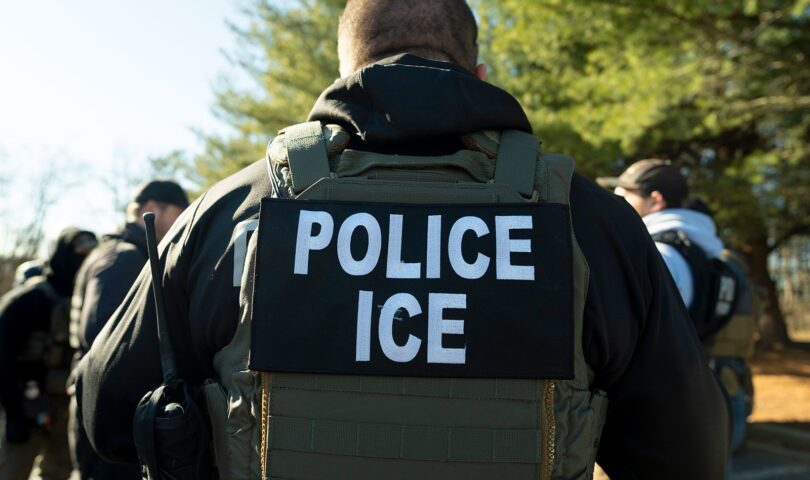
President Donald Trump’s administration has detained dozens of parents and spouses of active-duty U.S. troops as it rolls back immigration protections for military families to pursue its mass deportation agenda, an Associated Press investigation found.
More than 50 parents and spouses of active-duty service members have been detained since Trump took office for a second term, and at least six have been deported and one self-deported, the AP found in the first accounting of such detentions, which the government does not track. At least eight immediate family members of U.S. service members remain in federal immigration custody.
Parents and spouses of people in the military have generally been shielded from deportation under bipartisan consensus for decades. But the AP found they’re now routinely being detained for months as they try to adjust their legal status through the policies available to service members’ close relatives and even as the military continues to recruit by advertising immigration benefits for enlistees’ families. Experts warn that the reversal could undermine military preparedness even as the U.S. is at war in Iran. It’s left military members without emotional support and caretakers for their children, delayed deployments and forced some to take leave.
“How can I even focus on my military career because I have to worry about how my wife is doing?” said Army Sgt. Hedar Leonel Turcios Juarez, who was stationed in Fort Bliss, Texas, when his wife was detained outside a Walmart in front of their 6-year-old daughter in July.
A handful of detentions of service members’ spouses have prompted public backlash and led to intervention by Homeland Security Secretary Markwayne Mullin to secure their release.
The Department of Homeland Security has said it does not compile data on these cases. The AP obtained information by analyzing thousands of federal court records compiled by Habeas Dockets, a project run by the Immigration Justice Transparency Initiative; by reviewing existing media coverage; and by verifying information with family members and attorneys. The actual number is likely much higher than the 52 cases AP found.
The AP asked for comment from DHS on each case, including the individuals’ immigration and criminal history. The agency did not provide specific information about the majority of cases but noted that at least seven people had been removed from the U.S. before, at least eight had removal orders and at least two had drunken-driving or drug-related convictions.
“DHS and ICE value the contributions of all those who have served in the U.S. military,” DHS said in a statement. “U.S. military service alone does not automatically grant lawful immigration status, or exempt aliens from the consequences of violating U.S. immigration laws.”
The Pentagon declined to comment on the AP’s findings.

- MS NOW, CNN and Politico say their journalists were denied access to White House after Trump ban - September 20, 2026
- Trump targets more news outlets, saying he will ban CNN, MS NOW and Politico from the White House - September 19, 2026
- Sophie Cunningham expresses thoughts on next WNBA commissioner - September 16, 2026