

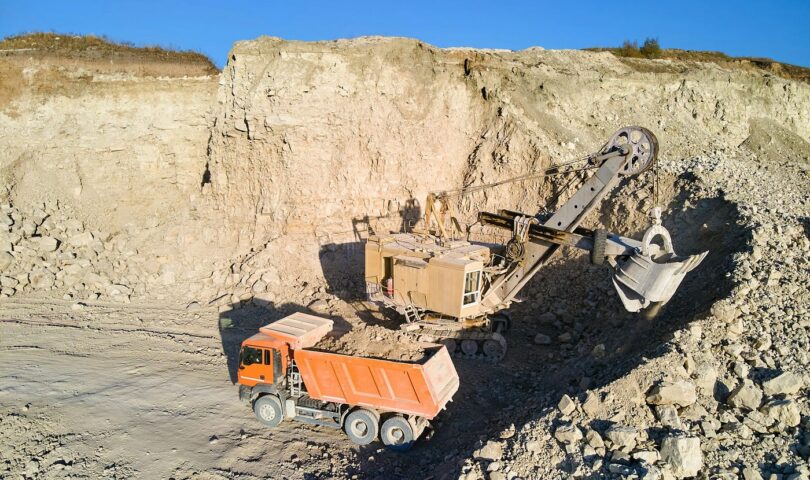
State taxpayers will spend up to $50 million on the polarizing Copperwoodcopper mine in the far western Upper Peninsula following a vote Tuesday by the Michigan Strategic Fund.
Toronto-based Highland Copper Inc. pitched the project in 2023 as a $425 million mine that will create 380 jobs during its 11-year lifecycle — and one that needed state dollars to be viable.
After several attempts to obtain a state subsidy, the company succeeded on Tuesday when the Strategic Fund awarded the company $45 million toward an estimated $129 million in estimated site readiness costs. It awarded another $5 million to the Gogebic County Road Commission to make road updates in Wakefield Township.
The funding comes from the controversial — and now-defunded — SOAR(Strategic Operating and Attraction Reserve) Fund. The money had been allocated to the Strategic Fund board in October 2022 and ended up unused. As a result, lawmakers will not have to approve Tuesday’s grant.
The mine project — which would be the first in the Upper Peninsula since 1955 — has been pushed by lawmakers and economic developers, who said recent polling showed that 70% of state residents supported it.
The mine is “the most important economic opportunity” for the entire Upper Peninsula, said Marty Fittante, CEO of InvestUP, an economic development group.
“This grant delivers infrastructure the Western UP desperately needs but cannot afford: infrastructure to attract good-paying jobs like those that Copperwood brings.”
The state’s grant will cover nearly 10% of the $425 million project cost estimate as originally proposed in 2023.
However, Highland Copper said it will be revising project costs by March — along with considering a smaller facility that would use less power and supplies. Unclear is whether hiring will remain at 380 expected new jobs.
Public opposition
During at least two hours of public comments before the vote, many people raised questions about whether the economic value of the mine offset the costs to the region’s ecology and to taxpayers.
Most of the speakers opposed the project, warning of risks to nearby Lake Superior and the Porcupine Mountains from mining and its byproducts.
“We must protect Lake Superior at all costs from this mine,” Brian Mitchell, a Novi-based nature photographer, said. “If we do not protect our fresh water, no other business, economy or investment really matters in this state.”
Many noted that the mine deal first came up for a vote in early 2024, and proponents tried several times to get lawmakers to either approve it as a SOAR appropriation or annual budget earmark. Tuesday’s vote on the company grant was 7-2.
The company is trying to attract additional funding for the Copperwood project. The $45 million state grant is worth more than half of Highland Copper’s (OTC: HDRSF) market value, which stood at $80 million Tuesday based on the company’s stock price of 12 cents a share.
Without the state funding, financing the full project would be “incredibly more challenging,” said company CEO Barry O’Shea told the board.
That alone is a concern, Cindy Warner, a former member of the Strategic Fund board, wrote in a letter sent this week to oppose the property.
“This is a proposal to backstop, with public money, a project that private capital markets have not fully backed on their own merits,” she wrote. “This is not a proper use of Michigan taxpayer dollars.”
The Export-Import Bank of the United States last fall indicated interest in loaning Highland $250 million through its Make More in America Initiative, but no financing has been finalized.
Several tries over years: A timeline
Tuesday’s vote comes three years after the Michigan Economic Development Corp. initially offered Highland Copper Inc. a $50 million subsidy plus additional funding for recruitment and other hiring needs, documents obtained by Bridge through the Freedom of Information Act show.
Several failed attempts to seed the project with public money followed:
- The Strategic Fund board, after asking rare questions during a public meeting in January 2024, postponed a vote to give Highland Copper $50 million. Upon prodding from the board, the company CEO acknowledged it had no investors and a fraction of the capital it needed to build the mine after the subsidy.
- The proposal returned in March 2024, and the board passed it without discussion. In committee before the meeting, they’d set up conditions:Highland Copper could only get the money if it had $150 million in capital.
- After the proposal stalled in gaining legislative support for the money to be appropriated, Rep. Greg Markkanen, R-Hancock, switched gears: He sought $50 million in summer 2024 for Wakefield Township to fund mine-related infrastructure like roads and internet. His earmark request did not make it into the budget.
The proposal “appears in every way identical to what has already been denied three times,” said Tom Grotewohl, founder of Protect the Porkies, a nonprofit organization opposing proposed mines in the UP.
“To propose it a fourth time is a grotesque attempt to steamroll over the clear will of the people,” he told Bridge.
Yet several lawmakers touted the project during Tuesday’s hearing, noting the region’s mine history and saying that state oversight would protect the environment.
Rep. Dave Prestin, R-Cedar River, also spoke of economic revitalization.
“For too long, the state of Michigan and its policies ignored this once prosperous region. The people have been abandoned, employers have left, hospitals have closed, the tax base has been devastated,” he said.
The grant, he said, is a responsible use of state funding.
“The roads, power systems, and telecommunications improvements supported by this grant will remain in place and continue serving the region for decades after the project operations conclude,” he said.
Looking ahead
The mine will add US-based copper production at a time when electronics and data centers rely on the mineral, and the Trump administration seeks to boost domestic production. US copper is about 4% of the world’s supply.
O’Shea, the CEO, said Highland Copper is preparing to start construction in 2028, a year after it releases its updated feasibility study that will refine its Copperwood plans.
So far, the company has spent about $15 million on the project.
Meanwhile, the state said it would reduce the grant award if the overall investment and job creation target declines.
The deal also set a few conditions on the grant award: Highland Copper needs to show $150 million of additional financing by spring 2028, along with a spreadsheet of anticipated spending. Developers also will have to prove they created 380 jobs and finish the infrastructure spending by March 31, 2033.

- Gov. Whitmer Lowers Flags to Honor Dolly Parton - August 26, 2026
- Controversial UP copper mine gets $50M in state grants after years of trying - August 26, 2026
- Country Music Superstar Dolly Parton Dies at 80 Years Old - August 25, 2026