

And then there were two.
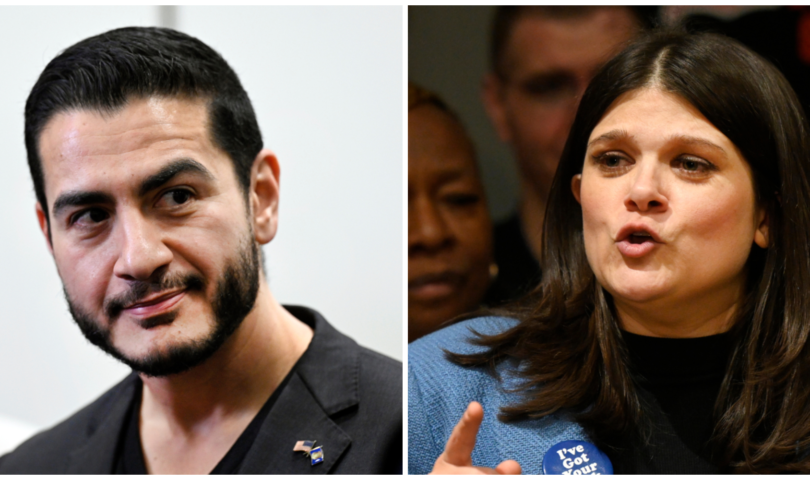
In one of the nation’s most closely watched primaries, Mallory McMorrow’s Sunday departure quickly reshaped Michigan’s Democratic US Senate primary between US Rep. Haley Stevens and former public health official Abdul El-Sayed, who represent opposite wings of the party.
Voters won’t have to wait long to see the new, two-way dynamic. Stevens and El-Sayed are expected to debate Tuesday night in Grand Rapids.
The stakes are high: They’re competing for the chance to take on Republican Mike Rogers for a seat Democrats need to retain if they hope to win majority control of Congress. And experts say the race could help define the future of an increasingly divided party.
“This is a really good test of where the national Democratic Party is, and where the direction of the party is going, because now it’s not muddled by a three-way race,” Jessica Taylor of the Cook Political Report told Bridge Michigan. “You have a very clear centrist lane…versus the progressive outsider.”
McMorrow had positioned herself as a middle ground candidate between Stevens, who has garnered establishment support, and progressive favorite El-Sayed. But her path to victory had narrowed significantly in recent weeks.
So what happens now? Here’s what we know.
Who has the advantage? It’s still a close call
It’s unclear whether McMorrow’s exit will be a major boon for either El-Sayed or Stevens, as McMorrow supporters didn’t represent a huge pocket of voters. But they could make a difference in a close race and are “swayable,” pollster Richard Czuba said.
“The longer-term impact is that this becomes a very clearly delineated race” between a true progressive and more mainstream Democrat, he said.
McMorrow herself stopped short of endorsing either El-Sayed or Stevens, but she vowed that whoever wins the Aug. 4 primary will have her “full support” against Rogers.
McMorrow’s departure from the race has prompted many prominent Democrats and liberal groups to publicly weigh in after months of watching from the sidelines.
EMILY’s List, a prominent Democratic-aligned political action committee that supports pro-choice women nationwide, endorsed Stevens after McMorrow dropped out, as did Attorney General Dana Nessel.
“Haley is wicked smart, has won multiple highly competitive races, and she connects with people on a level so sincere and genuine that everyone who meets her feels truly seen and heard,” said Nessel, who had worked closely with McMorrow on several state policy issues.
El-Sayed, meanwhile, picked up his first endorsement from one of McMorrow’s state Senate colleagues: Sen. Stephanie Chang, a Detroit Democrat who cited El-Sayed’s ability to “not just weather the storm of unaffordable healthcare and energy and water bills, but come out of this storm thriving.”
Debate to offer first glimpse of head-to-head
The new dynamics of the race will be on full display Tuesday night as El-Sayed and Stevens debate at WOOD-TV studios in Grand Rapids.
Though the candidates have shared a debate stage before, the direct one-on-one contrast and how the candidates perform will be “really telling” in terms of who has the edge heading into the final stretch of the primary, said Taylor of the Cook Political Report.
In previous debates, the candidates have clashed on health care, foreign policy, corporate campaign cash and more.
Tuesday’s hourlong debate is set to start at 7 p.m. Want to tune in? Here’s how.
High stakes, big bucks
Outside groups have already spent considerable sums in the primary, much of it to benefit Stevens.
The national ad-tracking firm AdImpact’s latest analysis of the Democratic Senate primary found $46.1 million in ad spending and reservations as of July 1, 74% of which supports Stevens.
El-Sayed, a longtime critic of corporate political contributions, has attacked Stevens for her corporate contributions and affiliation with the American Israel Public Affairs Committee, a pro-Israel group more commonly known as AIPAC.
“The same party insiders that both Mallory McMorrow and I have had the courage to challenge have been bullying anyone who opposes their chosen candidate — and now they’ve pushed McMorrow out of this race,” El-Sayed said in a Sunday fundraising email, framing the race as a fight between people power and the establishment “essentially buying a Senate seat.”
Stevens has sidestepped questions about AIPAC, instead pointing to her support of comprehensive campaign finance reform.
It’s possible El-Sayed could see increased support from AIPAC opponents in coming weeks. American Priorities PAC, a committee formed this year in part to counter AIPAC and support vocal critics of Israel, is “fully committed” to seeing El-Sayed become the Democratic nominee, according to POLITICO reporter Lisa Kashinsky.
What the polls say
Bolstered by high-profile endorsements from groups like United Auto Workers, El-Sayed has enjoyed a slight lead in polling in recent weeks, including June surveys from Quantus Insights, Wedgewood Polls and Susquehanna Polling & Research.
Primary polling continues to be close, however, as does general election polling seeking voter attitudes on hypothetical matchups between Rogers and Democratic candidates.
Czuba, a longtime Michigan pollster, noted the election will be a test of progressive candidates’ ability to message in a swing state, where independents, older voters and voters without college degrees play a major role in determining who wins.
Though El-Sayed is making headway among voters under 40, Stevens has polled well among Black voters, who are critical to winning a statewide primary in Michigan, he added.
Stevens continues to make the case that she’s the strongest candidate to take on Rogers in the general election, pointing to her track record of winning in swing districts and polling showing her performing well against Rogers among independent voters.
“No one wants Abdul to win more than the Republicans,” Stevens said in a Morning Joe interview Monday. “And that’s because they think that they can beat him in November. What they’ve never done is beaten me.”
Already voted for McMorrow? You can change your vote
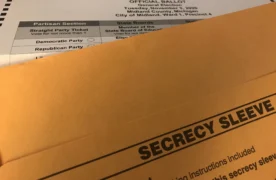
In Michigan, clerks are required to mail ballots to absentee voters 40 days prior to the election, meaning voting has already begun for the Aug. 4 primary. McMorrow’s name will also still be on the Democratic primary ballot, even though she’s no longer actively pursuing the seat.
McMorrow voters who already mailed in their absentee ballots can visit their local clerk’s office or submit a written request to spoil their ballot by 5 p.m. July 31, the Friday prior to the election.
Voters who choose to do so must clarify whether they’d like to pick up a new ballot in person or have it mailed.
Don’t wait too long — an absentee ballot cannot be spoiled on Election Day if it’s already been received by the clerk.
To check your ballot’s status or learn more about the voting process, visit Michigan Voter Information Center online.