

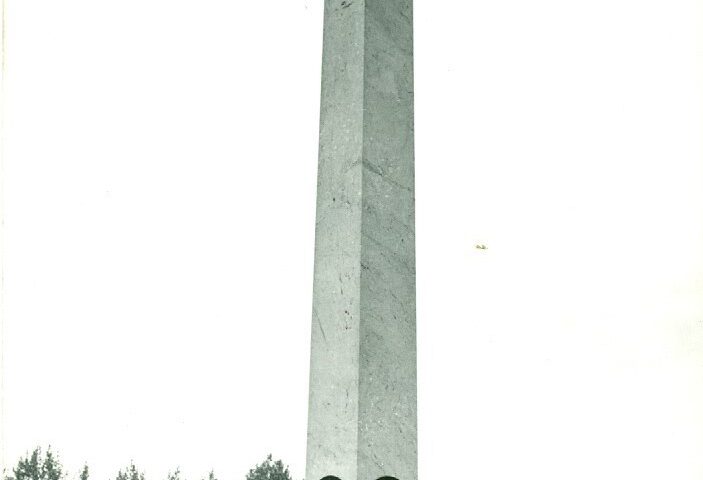
After decades of advocacy to protect a historic Native American burial site, on what is known as Brady Park in Sault Ste. Marie, the large obelisk is finally being removed.
The obelisk was placed at the site without tribal consultation in 1907 to mark the 50th anniversary of the Soo Locks. For years, tribal communities have advocated for the removal of the structure. Back in June, the US Army Corps of Engineers opened a 30 day comment period regarding the monument and its removal. The end result was the decision to remove the piece from the park.
“In June of 1820, during treaty negotiations at Sault Ste. Marie, our grandfather, Crane Clan Chief of the Great Lakes, Shingabowaasin, made it clear to the United States that our ancient burial ground, Wudjiwong, must be protected,” said Bay Mills Ojibwe History Department Historian Paula Carrick. “He insisted that its protection be written into the treaty, recognizing even then—205 years ago—that this land held the remains and the spirit of our people since time immemorial. His words have guided us for seven generations.”
In acknowledgment of the cultural and historical significance of this location, and in consultation with federally recognized Tribes who continue to utilize the location within Brady Park for cultural and religious practices, the Corps of Engineers began removing the structure on Wednesday, Oct. 15.
“For decades, we have sought to have the obelisk removed from this sacred place. Today, we feel a deep sense of fulfillment and gratitude to finally be able to witness this moment. In honoring the work that our grandfather, Shingabowaasin, began so long ago, we carry forward his vision and commitment,” said Carrick. “This is historic day of healing, restoration, and fulfillment.”
The removal of the Obelisk is being conducted in accordance with a Memorandum of Agreement developed in consultation with federally recognized Tribes, Michigan State Historic Preservation Office and National Park Service.
“The removal of the obelisk represents a meaningful example of how federal agencies and Tribal Nations can work together through the Section 106 process to right historical wrongs. This is not just the removal of a monument, but the recognition of tribal sovereignty and the enduring responsibility to protect our sacred places,” said BMIC President Whitney Gravelle. “Bay Mills Indian Community is proud to stand alongside our fellow Anishinaabe Nations in ensuring that Wudjiwong is treated with the care and respect it has always deserved with a special thanks to the Bay Mills History Department and their decades of advocacy, teaching, and leadership.”
The removal of the Obelisk is outlined in the MOA, developed under Section 106 of the National Historic Preservation Act, which is the process by which federal agencies consider impacts to historic properties.

- A Democratic upset in MI-01? According to Debbie Stabenow, it’s more likely than you think - October 14, 2026
- Ukraine attacked by Russia with no advanced warning - October 14, 2026
- The Benefits of Buying Local - October 14, 2026